Stress is part of being human.
Most of us do not have to think very hard to identify something that has caused us stress recently. It may be work, family responsibilities, finances, health concerns, conflict, an overflowing schedule, uncertainty about the future, or simply the accumulation of dozens of small demands.
Sometimes we imagine that the goal of stress management is to eliminate stress. But that is neither realistic nor necessarily desirable.
Stress itself is not the enemy. Challenge is part of a healthy life. Exercise stresses the body. Learning stresses the mind. Parenting is stressful. Meaningful work can be stressful. Serving other people can be stressful. Stepping out in faith can certainly be stressful. Some forms of stress—sometimes called eustress—challenge us in ways that allow us to learn, adapt, and grow.
The problem is not simply stress.
The problem is stress without recovery.
When the Alarm Stays On
God created the human body with a remarkable alarm system.
When we perceive danger, our bodies rapidly prepare us to respond. Heart rate increases. Breathing changes. Adrenaline rises. Muscles prepare for action. Attention narrows. We often describe this as the fight-or-flight response.
That response is useful when there is an immediate threat.
The difficulty is that the same system responds to many of the threats of modern life: a difficult conversation, financial pressure, criticism, conflict, uncertainty, an upsetting message on our phone, or worry about something that might happen tomorrow.
Our bodies can react to these situations as though something must be done right now.
That creates an important distinction:
Not every feeling of urgency means that something is actually urgent.
And:
Not every emotion is a call to action.
Sometimes the wisest response to a strong emotion is not immediate action. Sometimes it is to stop long enough to understand what is happening.
When the alarm system remains activated for too long, stress begins affecting much more than how we feel. Chronic stress can affect sleep, blood pressure and cardiovascular health, digestion, pain, mood, concentration, memory, relationships, and decision-making.
Fortunately, God did not design us only with an alarm system. He also designed us with a recovery system. Heart rate can slow. Breathing can settle. Muscles can relax. Digestion resumes. The body moves from defense toward restoration.
We need both.
There is a rhythm built into healthy life:
Stress + recovery → growth.
Without adequate recovery, however, repeated stress can become harmful.
Name What You Are Actually Feeling
One of the simplest ways to begin responding differently to stress is to ask:
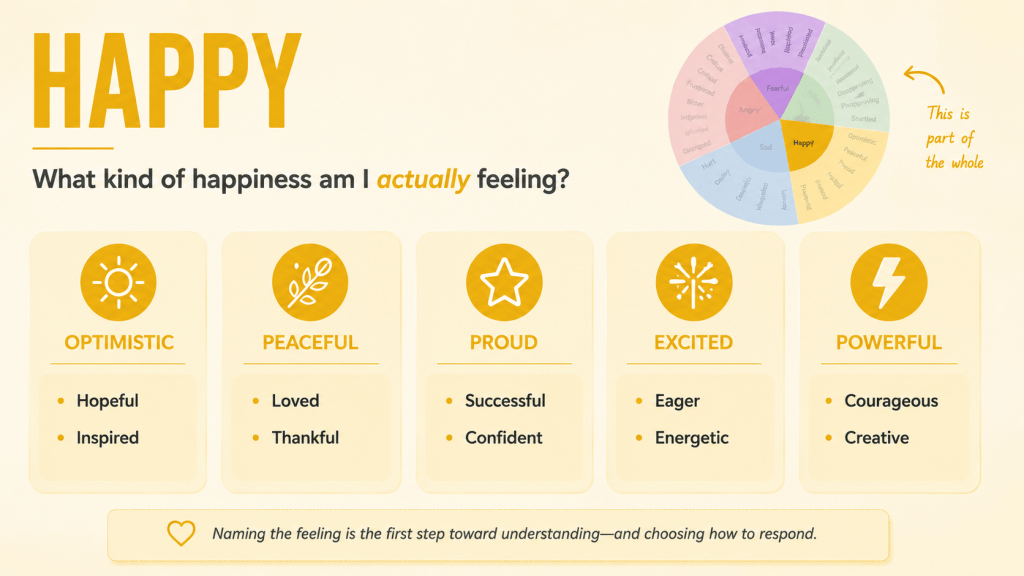
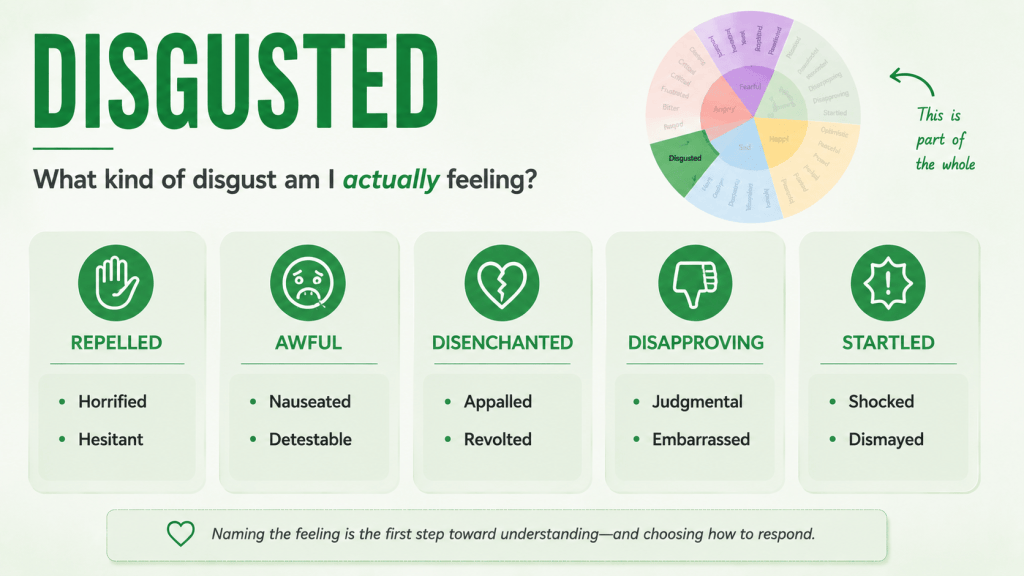
What am I actually feeling?
“Stressed” is often only the beginning of the answer.
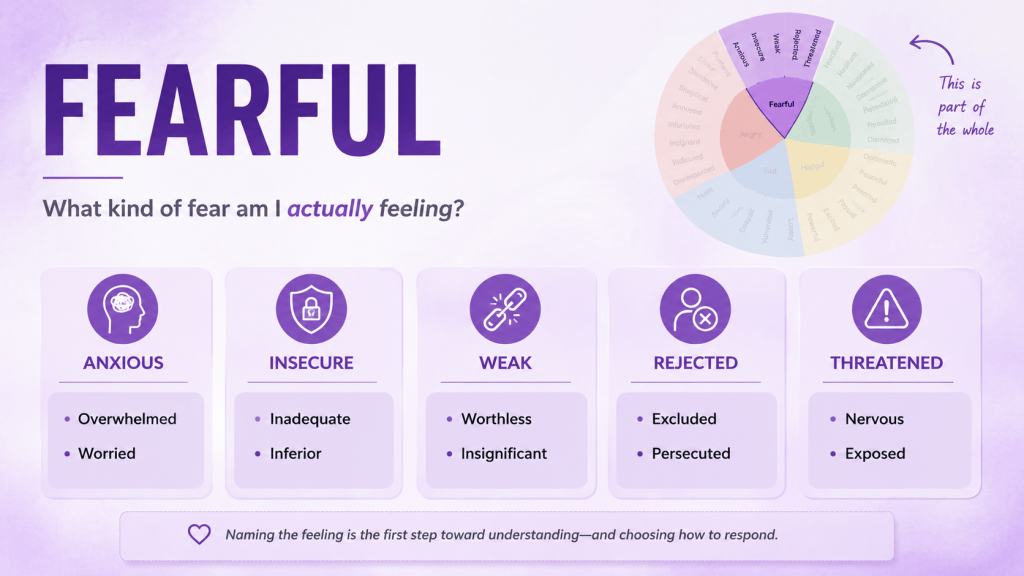
Am I afraid?
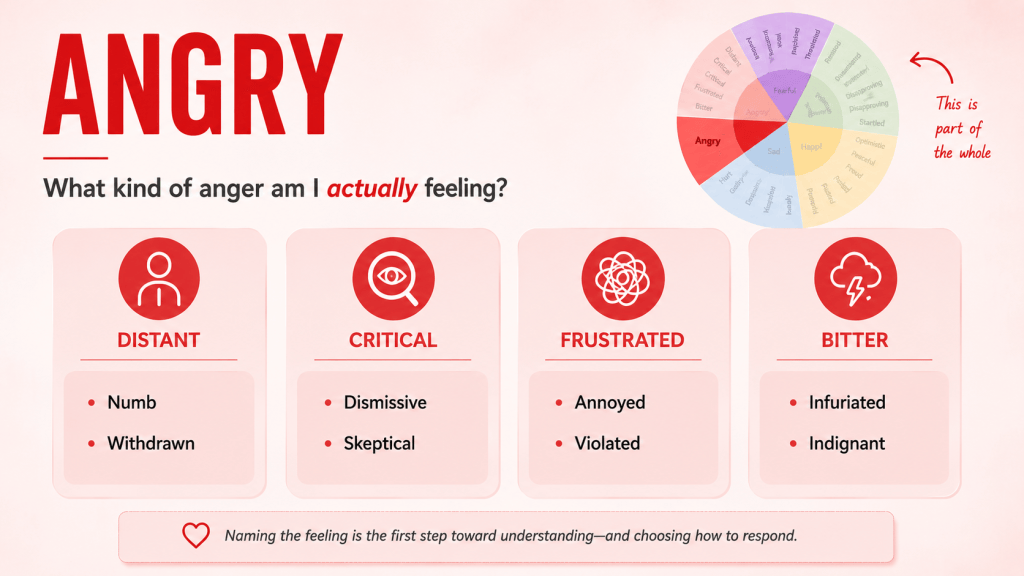
Angry?
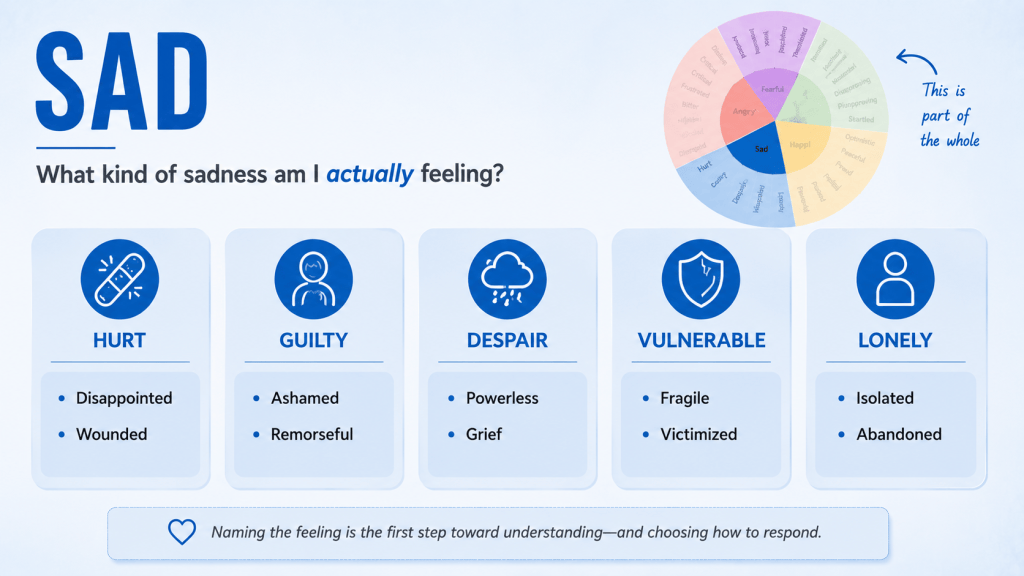
Disappointed?
Lonely?
Guilty?
Resentful?
Overwhelmed?
Exhausted?
An emotion wheel can be useful because it gives us a vocabulary for experiences that otherwise remain vague. What initially feels like “anger,” for example, might actually involve feeling dismissed, violated, humiliated, or frustrated. Sadness might involve grief, loneliness, disappointment, shame, or vulnerability.
Naming an emotion does not mean surrendering to it. It helps us understand it.
There is a significant difference between saying, “Everything is terrible,” and saying, “I am afraid because I don’t know what is going to happen.”
The second statement gives us something we can examine.
And once we understand what we are experiencing, we have more freedom to choose how we will respond.
Martha and the Divided Mind
There is a remarkably familiar picture of stress in Luke 10.
Martha is serving while Mary sits at Jesus’ feet. Martha finally comes to Jesus, frustrated that Mary has left her to do the work alone.
Jesus tells her:
“Martha, Martha, you are worried and troubled about many things.”
—Luke 10:41
The problem was not that Martha was working.
Serving was not wrong.
The problem was that her mind had become pulled in too many directions. The presentation describes Martha simply as “a mind pulled in too many directions.”
That description could fit many of us.
We may be physically doing one thing while mentally carrying ten others. We replay yesterday’s conversation, anticipate tomorrow’s problem, worry about someone else’s reaction, remember something we forgot to do, and think about what needs to happen next—all while trying to accomplish the task directly in front of us.
Sometimes peace begins by bringing our attention back to the thing God has actually placed before us right now.
The Brain Learns What We Practice
Our responses to stress are not fixed.
The brain changes with experience. Patterns that are repeatedly practiced become easier to repeat. In that sense, the brain learns what we practice.
That raises an uncomfortable but useful question:
What am I practicing?
Am I repeatedly practicing worry?
Anger?
Resentment?
Catastrophizing?
Or am I practicing gratitude?
Prayer?
Forgiveness?
Trust?
This does not mean pretending that painful circumstances are pleasant. It means recognizing that repeated patterns of thought and response gradually shape us.
We cannot always choose what happens to us.
But we can increasingly learn to choose what we practice in response.
Peter: Where Is Your Attention?
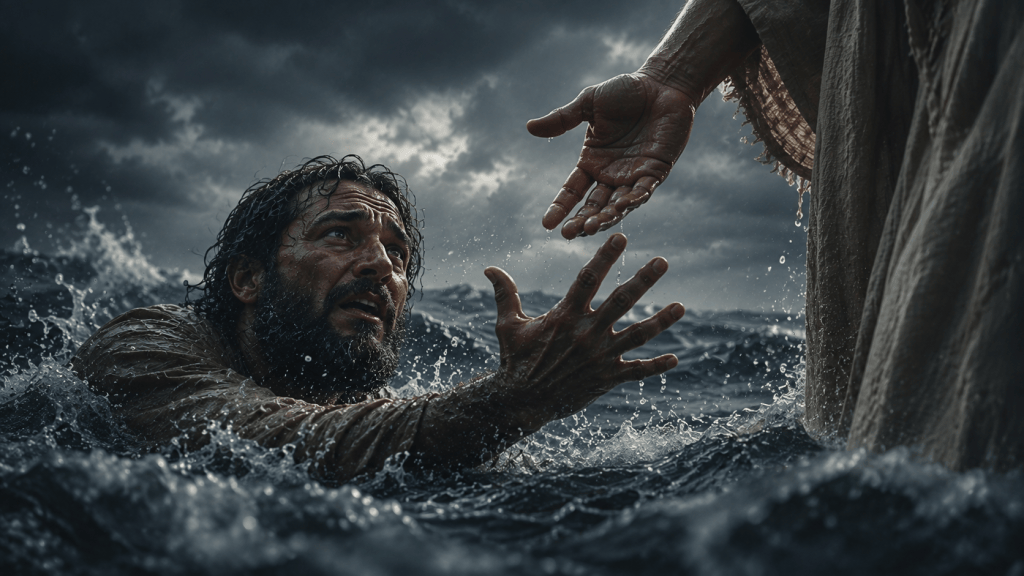
Peter’s experience walking on the water gives us another picture.
Peter steps out of the boat and walks toward Jesus. But then his attention shifts toward the wind and waves, and fear overwhelms him.
The storm had been there the entire time.
What changed was where Peter’s attention was directed.
The lesson is not that Christians should ignore problems. The wind and waves were real. But there is a broader principle here:
Where attention goes, emotion often follows.
Stress naturally narrows our attention toward threats. We begin scanning for what might go wrong. The mind rehearses possibilities, conversations, failures, dangers, and uncertainties.
Sometimes we need to deliberately redirect attention—not away from reality, but toward a larger reality.
The storm is real.
But so is Jesus.
What Am I Actually Carrying?
One of the most useful questions in a stressful situation is:
What part of this is actually mine to carry?
There are things I can control:
my choices, my words, my attitude, my habits, my schedule, my response, and my next faithful step.
There are many other things I cannot control:
other people, the past, much of the future, every circumstance, every outcome, and God’s timing.
Much of our stress comes from mentally assuming responsibility for things over which we have little or no control.
We try to control another person’s reaction.
We replay the past as though thinking about it one more time might somehow change it.
We attempt to solve tomorrow before tomorrow arrives.
We try to guarantee outcomes that were never ours to guarantee.
There is tremendous freedom in remembering:
God calls us to faithfulness—not omnipotence.
My responsibility is not to control everything.
My responsibility is to discern the next faithful step and take it.
God’s Invitation Is Not “Try Harder”
Scripture repeatedly responds to human anxiety with an invitation to release what we were never meant to carry alone.
Jesus says:
“Come to Me, all you who labor and are heavy laden, and I will give you rest.”
—Matthew 11:28
Peter writes:
“Casting all your care upon Him, for He cares for you.”
—1 Peter 5:7
And Paul gives a remarkably practical response to anxiety in Philippians 4:6–7: pray, ask, give thanks—and allow God’s peace to guard the heart and mind.
Notice that biblical peace is not presented as denial.
We bring the actual problem to God.
We ask.
We acknowledge our dependence.
We deliberately remember reasons for gratitude.
And then we entrust what remains to Him.
Peace Does Not Require the Absence of a Storm
In Mark 4, Jesus and His disciples cross the Sea of Galilee when a violent storm develops.
The storm was real.
The disciples were genuinely in danger.
And Jesus was still there.
That story reminds us of an important truth:
Peace does not require the absence of a storm.
We sometimes postpone peace.
I’ll be at peace when this problem is solved.
I’ll relax when this week is over.
I’ll be okay when I know what happens.
I’ll rest once everything is under control.
But there will nearly always be another uncertainty beyond the present one.
Christian peace is not ultimately confidence that nothing difficult will happen. It is confidence about who is with us when it does.
Practicing Peace
Peace can become something we practice.
That begins, in part, with caring for the body God has given us. Sleep matters. Exercise matters. Nutrition matters. Time outdoors matters. Recovery matters.
These are not substitutes for faith. The physical and spiritual dimensions of human life are not enemies. God created both.
When stress rises, it can also help to use a simple sequence:
Pause → Calm → Name → Decide → Act or Surrender.
Pause. Resist the demand to react immediately.
Calm. Slow your breathing. Relax your muscles. Give the body’s alarm system an opportunity to settle.
Name. What am I actually feeling?
Decide. What is happening here? What am I afraid will happen? Is that happening now? What can I control?
Act—or surrender. If there is something faithful and constructive for you to do, do it. If there is not, continuing to mentally carry the problem will not solve it. Give it to God.
A useful series of questions is:
What am I feeling? What am I afraid will happen? Is it happening now? What can I control? What is my next faithful step?
Don’t Carry Life Alone
Stress has a tendency to isolate us.
Yet human beings were not designed to carry life alone.
Prayer, Scripture, and worship reconnect us with God. Family, friends, church, and community reconnect us with one another.
And sometimes we need more help.
There are times when the faithful next step is talking with a physician, counselor, psychologist, pastor, trusted family member, or friend. Asking for help is not the opposite of faith. Sometimes asking for help is the faithful action.
Sabbath: Practicing the Art of Stopping
There is another principle woven into God’s design for human life that our culture desperately needs:
Stop.
Sabbath is not simply a command to stop working. It is a recurring reminder that the world does not depend upon our constant activity.
For one day:
Stop producing.
Stop fixing.
Stop controlling.
Stop striving.
Stress 2 powerpoint.pptx
And something remarkable happens.
The world keeps turning.
The sun rises.
Birds sing.
Hearts beat.
God sustains.
God said, “Remember the Sabbath day, to keep it holy,” and Jesus later reminded His listeners that “the Sabbath was made for man.”
Sabbath therefore teaches something profound about stress:
God is God. I am not.
For six days we work, plan, build, serve, solve problems, care for people, and carry responsibilities.
Then we stop.
Not because every task is finished.
Not because every problem is solved.
Not because everyone is satisfied with us.
We stop because God has invited us to rest.
Sabbath becomes a weekly act of trust. For twenty-four hours we relinquish the illusion that everything depends upon us and remember that the universe has a God—and it isn’t us.
What Are You Carrying?
Ultimately, stress management is about more than relaxation techniques.
It asks a deeper question:
What are you carrying?
Some burdens really are ours.
There may be a conversation we need to have. A boundary we need to establish. A habit we need to change. An apology we need to make. A task we need to complete. Someone we need to help.
If it is yours to carry:
Take the next faithful step.
But other burdens belong to God.
Another person’s choices.
An outcome you cannot guarantee.
A future you cannot see.
A past you cannot change.
A problem you have done everything reasonable to address.
God’s timing.
If it belongs to God:
Give it back to Him.
Then rest.
Not because everything is under our control.
But because everything is ultimately in His hands.
A Simple Practice for This Week
When you notice yourself becoming stressed, try asking:
- Pause: Do I actually need to respond right now?
- Calm: Can I give my body a moment to come out of alarm?
- Name: What am I actually feeling?
- Examine: What am I afraid is going to happen? Is it happening now?
- Discern: What part of this can I control?
- Act: What is my next faithful step?
- Release: What am I carrying that actually belongs to God?
- Rest: Can I trust Him with what remains?
Peace is not a life without responsibility, difficulty, uncertainty, grief, or stress.
It is learning to carry what God has actually given us to carry—and learning to put down what He has not.



Leave a Reply